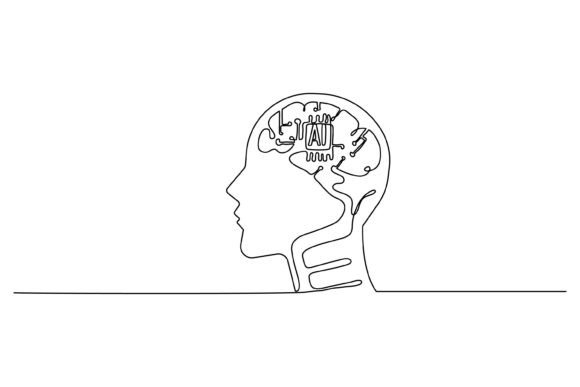
Evaluating Continuous Line Design of Computer Circuits for Modern Visual Projects
In the evolving landscape of digital illustration and graphic design, specific stylistic approaches often emerge to bridge the gap between complex technology and aesthetic simplicity. One such approach is the Continuous Line Design of Computer Circuits and boards. This artistic technique involves rendering intricate electronic pathways, microchips, and neural networks using a single, unbroken stroke. While originally a method for quick sketching and warm-up exercises for artists, it has matured into a sophisticated design language used in branding, educational materials, and conceptual art regarding artificial intelligence.
For designers, educators, and content creators evaluating visual assets, understanding the utility and limitations of this style is crucial. The concept often extends beyond mere hardware representation; it frequently explores the metaphorical connection between silicon-based processing and biological cognition, such as the continuous line design of a computer circuit board in the human brain. This article provides an objective evaluation of this design concept to help you determine if it aligns with your project goals.
Defining the Aesthetic and Conceptual Scope
At its core, the continuous line style relies on economy and flow. Unlike traditional technical illustrations that use varying line weights, shading, and distinct segments to denote depth and separation, this method forces all elements to connect. When applied to computer circuits, the artist must navigate the rigid, geometric nature of PCB (Printed Circuit Board) layouts while maintaining the fluidity of a single stroke.
This creates a unique visual tension. The resulting image suggests connectivity and seamless data flow, which is why it is increasingly popular in representing artificial brain intelligence technology design concepts. The unbroken line mimics the firing of neurons or the endless loop of code, making it a powerful metaphor for AI and machine learning. When these designs are executed as decorative elements on a white background, they offer high contrast and clarity, ensuring that the focus remains entirely on the form and path of the line.
Reasons to Consider This Design Style
There are several practical reasons why a professional might select this specific aesthetic over more realistic or detailed 3D renderings:
- Visual Clarity: By stripping away color, texture, and complex shading, the design reduces cognitive load for the viewer. This makes it ideal for explaining complex systems without overwhelming the audience.
- Metaphorical Strength: The continuous nature of the line inherently suggests unity and integration. For projects discussing the merger of human and machine intelligence, this visual cue reinforces the narrative.
- Versatility in Format: Because these designs are often vector-based (available in EPS and SVG formats), they are infinitely scalable. A single asset can be used on a business card or a massive billboard without losing resolution.
- Modern Minimalism: Current design trends favor clean, minimalist interfaces. Decorative elements drawn on a white background fit seamlessly into modern web design, presentation decks, and editorial layouts.
Benefits and Practical Applications
The primary benefit of utilizing a Continuous Line Design of Computer Circuit imagery lies in its adaptability. Since the output typically includes vector files like EPS and SVG, along with raster formats like JPG, the assets are ready for both print and digital media. Designers can easily recolor the stroke to match brand guidelines or animate the line drawing itself to simulate data transmission.
This style is particularly effective in educational contexts. When teaching the basics of how a CPU interacts with memory, or how neural networks mimic brain synapses, a simplified line drawing can serve as an excellent schematic. It abstracts the unnecessary details of specific component models while highlighting the topology of the connections.
Furthermore, in the realm of corporate branding for tech startups, this aesthetic conveys innovation without appearing cluttered. It suggests a company that values efficiency and streamlined processes. The "human brain" variation specifically appeals to biotech firms and AI research groups looking to visualize the concept of "thinking machines" in a way that feels organic rather than coldly mechanical.
Tradeoffs and Limitations
While the aesthetic is compelling, it is not a universal solution. Evaluators must consider specific tradeoffs before committing to this style:
- Lack of Technical Precision: A continuous line drawing is an artistic interpretation, not an engineering schematic. It should never be used where precise pinouts, voltage levels, or exact component placements are required. Using this style for technical documentation could lead to confusion or errors.
- Complexity Constraints: There is a limit to how much detail can be conveyed in a single line before the image becomes a tangled mess. Highly complex motherboard layouts may lose their recognizability when forced into this constraint.
- Perception of Simplicity: In some contexts, the minimalism of the style might be perceived as too abstract or lacking in substance. If a project requires conveying robustness, heavy industry, or tangible hardware weight, a more solid, filled, or 3D representation might be more appropriate.
Decision-Making Insights: Is This the Right Fit?
To determine if this design concept aligns with your needs, consider the primary goal of your visual communication. If your objective is to evoke a feeling of connectivity, innovation, or the synthesis of biology and technology, the continuous line approach is a strong candidate. It excels in situations where the idea of the circuit is more important than the specific specs of the circuit.
This style is a strong fit for:
- Website hero sections and background patterns.
- Conceptual presentations on AI and future technology.
- Merchandise and apparel where a subtle, intellectual graphic is desired.
- Editorial illustrations accompanying articles on neuroscience or computing.
However, alternatives should be considered if your audience expects technical accuracy. If you are producing a user manual, a repair guide, or a datasheet, standard orthographic projections or photorealistic renders are superior choices. Similarly, if the brand identity relies on bold colors and heavy textures, the delicate nature of a single black line on a white background may not provide enough visual impact.
Final Evaluation
The Continuous Line Design of Computer Circuits represents a thoughtful intersection of art and technology. It transforms the rigid logic of electronics into a fluid narrative, making it an invaluable tool for storytellers and designers working in the tech sector. The availability of these designs in multiple formats (EPS, SVG, JPG) ensures they can be integrated into diverse workflows.
Ultimately, the decision to use this style depends on the balance between aesthetic appeal and informational density required by your project. When used correctly, it elevates the subject matter, turning a standard depiction of hardware into a symbol of intelligent design and seamless integration. For those researching visual strategies to represent the future of AI and computing, this approach offers a refined, professional, and conceptually rich option worth serious consideration.