Islamic Style Ornamental Window Arches: A Digital Gateway to Architectural Elegance
The history of architecture is written in stone, wood, and glass, but increasingly, it is being preserved and reimagined through digital vectors. Among the most captivating elements of historical design are Islamic style ornamental window arches. These structures are not merely functional openings; they are profound expressions of geometry, spirituality, and artistic mastery. For modern designers, architects, and cultural enthusiasts, accessing high-quality digital representations of these arches offers a unique opportunity to blend historical grandeur with contemporary creativity.
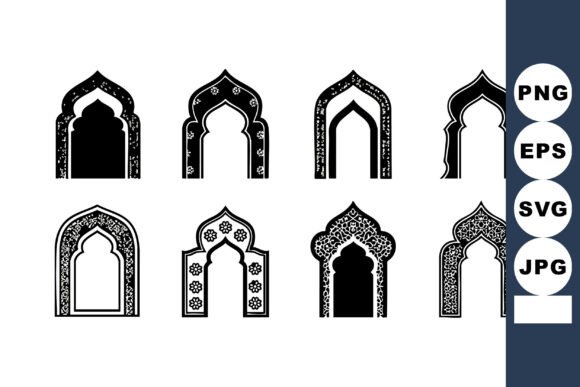
This article explores the significance of Islamic architectural motifs, specifically focusing on a curated collection of eight intricate window arches available in versatile vector formats. We will delve into why these designs matter, how they are used in modern projects, and the technical advantages of using scalable vector graphics in your workflow.
The Artistic Soul of Islamic Architecture
To truly appreciate the value of Islamic style ornamental window arches, one must first understand the philosophy behind them. Islamic art is renowned for its aniconic nature, meaning it generally avoids the depiction of sentient beings in religious contexts. Instead, it channels creative energy into three primary forms: calligraphy, vegetal patterns (arabesque), and geometric patterns.
Window arches serve as the perfect canvas for this triad. The arch itself is a structural necessity, but in Islamic architecture, it becomes a frame for light and shadow. The intricate latticework, often referred to as mashrabiya or jali, filters sunlight, creating a serene, dappled effect that enhances the spiritual atmosphere of a space. These patterns are mathematically precise, reflecting the Islamic view of the universe as an ordered, harmonious creation.
When we look at a digital vector of an Islamic arch, we are not just looking at a shape; we are looking at centuries of mathematical and artistic evolution. From the horseshoe arches of Moorish Spain to the pointed arches of Persian mosques, each curve tells a story of regional identity and shared heritage.
Why Vector Formats Matter for Designers
In the digital age, the medium is just as important as the message. The downloadable ZIP package featuring these eight arches includes SVG, EPS, JPG, and PNG files. Understanding the distinction between these formats is crucial for maximizing their utility in your projects.
- SVG (Scalable Vector Graphics): This is the gold standard for web design and modern digital interfaces. SVGs are resolution-independent, meaning they can be scaled up to the size of a billboard or down to a favicon without losing any clarity. They are also code-based, allowing developers to animate parts of the arch or change colors dynamically using CSS.
- EPS (Encapsulated PostScript): Preferred by professional graphic designers using software like Adobe Illustrator, EPS files are ideal for print media. Whether you are designing a large-format banner, a brochure, or packaging, EPS ensures that the intricate details of the ornamental patterns remain crisp and sharp.
- JPG and PNG: These raster formats are essential for quick previews, web content where vector support is limited, or for use in presentation slides. PNGs, with their transparency support, allow designers to overlay the arches onto photographs or textured backgrounds seamlessly.
By providing all four formats, this collection removes the technical barriers between inspiration and execution. You do not need to be a vectorization expert to utilize these assets; you simply need a vision for how they fit into your design.
Practical Applications in Modern Design
You might wonder, "Where do I actually use these?" The versatility of Islamic style ornamental window arches extends far beyond traditional architectural restoration. Here are several ways creatives are integrating these elements into modern workflows:
- Interior Design and Visualization: Interior designers often use 3D rendering software to show clients potential renovations. Importing SVG or EPS files of ornate arches allows for the rapid creation of feature walls, room dividers, or custom window treatments that evoke a sense of luxury and cultural depth.
- Graphic Design and Branding: Brands that wish to convey elegance, heritage, or global connectivity often incorporate geometric Islamic patterns into their logos or packaging. An arched window motif can frame product images or text, adding a layer of sophistication.
- Educational Materials: Educators teaching history, mathematics, or art can use these vectors to create engaging worksheets and presentations. Students can analyze the geometry of the arches, learning about symmetry, tessellation, and the historical context of the Islamic Golden Age.
- Digital Art and NFTs: Digital artists are increasingly exploring cultural motifs in the Web3 space. These detailed arches can serve as foundational elements for complex digital compositions, blending traditional aesthetics with futuristic themes.
Bridging Culture and Technology
One of the most significant aspects of this collection is its role in cultural preservation through technology. By digitizing these intricate designs, we make them accessible to a global audience. A designer in New York can easily incorporate a motif inspired by the Alhambra in Granada, while a student in Tokyo can study the geometric precision of Persian tiles. This accessibility fosters cross-cultural appreciation and understanding.
However, it is important to approach these designs with respect. Understanding the context of Islamic art helps avoid cultural appropriation. These patterns are not just "decorations"; they are deeply rooted in spiritual and cultural traditions. Using them thoughtfully—acknowledging their origins and respecting their significance—adds authenticity and depth to your work.
Common Misconceptions About Islamic Patterns
Despite their popularity, there are several misunderstandings regarding Islamic architectural elements. Clarifying these can help designers use them more effectively.
Misconception 1: All Islamic arches are the same.
In reality, there is immense diversity. The collection of eight arches likely includes variations such as the horseshoe arch (common in North Africa and Spain), the pointed arch (prevalent in Persia and India), and the multifoil arch (characterized by multiple lobes). Each type has distinct structural and aesthetic properties.
Misconception 2: These patterns are purely decorative.
While beautiful, many of these designs serve functional purposes. The lattice work regulates temperature and privacy, allowing air to circulate while blocking direct sunlight. In digital design, this translates to using these patterns not just for looks, but to create visual hierarchy and focus.
Misconception 3: Vector files are too complex to edit.
Many beginners fear that intricate vectors are uneditable. However, modern software allows users to ungroup elements, change colors, and simplify paths with ease. The provided SVG and EPS files are structured to be user-friendly, enabling even novice designers to customize the arches to fit their specific color palettes and layout requirements.
How to Get Started with Your Download
Once you have downloaded the ZIP file containing the Islamic style ornamental window arches, follow these steps to integrate them into your next project:
- Inspect the Files: Open the SVG files in a browser or vector editor to view the clean lines and details. Check the EPS files in Illustrator if you are preparing for print.
- Choose the Right Format: Decide whether your final output is digital (use SVG/PNG) or print (use EPS/JPG).
- Customize with Care: Adjust colors to match your brand or project theme. Consider simplifying the pattern if it is being used at a small size to maintain legibility.
- Contextualize: Place the arch in a setting that respects its origin. Use complementary fonts and imagery that enhance the elegant and detailed mood of the design.
In conclusion, Islamic style ornamental window arches are more than just design assets; they are bridges to a rich cultural heritage. By utilizing high-quality vector files, designers and creators can bring the timeless elegance of Islamic architecture into the modern world. Whether you are working on a commercial branding project, an educational resource, or a personal artistic endeavor, these eight intricate designs offer a foundation for beauty, precision, and cultural connection.
Embrace the fusion of tradition and technology. Let these digital arches open new windows of creativity in your work, ensuring that the legacy of Islamic art continues to inspire and enlighten future generations.