Understanding Black Abstract Organic Shape Circles: A Practical Guide for Designers
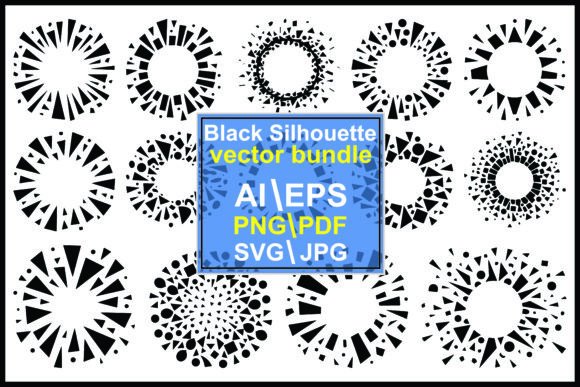
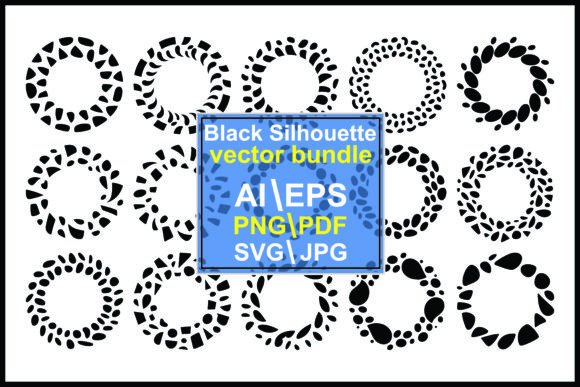
In the evolving landscape of graphic design, the demand for versatile, minimalist assets continues to grow. Among these resources, Black Abstract Organic Shape Circles have emerged as a staple for modern creatives. This collection features fifteen unique, irregular circular forms set against a clean white background, offering a blend of simplicity and artistic flair. For designers, marketers, and content creators, understanding the utility and distinct characteristics of these shapes is essential for making informed decisions about which visual elements best suit their projects.
The appeal of this specific bundle lies in its duality. It combines the structural familiarity of circles with the free-flowing nature of organic blobs. This hybrid approach allows for greater flexibility than rigid geometric shapes while maintaining the balance and focus that circular compositions provide. Whether you are designing a brand identity, creating social media graphics, or developing print materials, these elements serve as foundational building blocks that can elevate the visual hierarchy of your work.
Defining the Aesthetic: Minimalism Meets Organic Flow
At its core, the concept behind Black Abstract Organic Shape Circles is rooted in minimalist design principles. The high-contrast black-and-white palette ensures that the shapes remain the focal point, free from the distraction of color or complex textures. This isolation on a white background makes them incredibly easy to integrate into existing designs without requiring extensive editing or color matching.
What sets these shapes apart from standard vector circles is their irregularity. Each shape in the fifteen-piece collection possesses a unique silhouette, resembling hand-drawn ink blots, natural stones, or fluid liquid drops. This "imperfect" quality adds a human touch to digital designs, counteracting the sterility often associated with computer-generated graphics. The term "organic" here refers to shapes that mimic forms found in nature, characterized by smooth curves and asymmetrical balances rather than mathematical precision.
For professionals evaluating design resources, it is important to recognize that these are not merely decorative dots. They function as dynamic frames, borders, and background textures. Their versatility allows them to act as containers for text, highlights for product photography, or abstract accents that guide the viewer’s eye across a layout. The variety within the set ensures that designers can maintain consistency in style while avoiding repetitive visual patterns.
Comparing Formats: Choosing the Right File Type for Your Workflow
One of the most critical aspects of utilizing any digital asset is understanding the available file formats. This particular bundle offers a comprehensive range of options, including JPG, PNG, AI, EPS, SVG, and PDF files, all compressed into a single ZIP archive. Knowing when to use each format can significantly impact the quality and efficiency of your design process.
- Vector Formats (AI, EPS, SVG): These are arguably the most valuable files in the collection for professional designers. Vector graphics are resolution-independent, meaning they can be scaled to any size—from a small icon to a large billboard—without losing clarity. Adobe Illustrator (AI) and Encapsulated PostScript (EPS) files are ideal for users who need to edit the anchor points, adjust the curvature, or change the color of the shapes directly within design software. SVG (Scalable Vector Graphics) is particularly useful for web developers, as it allows for lightweight, crisp rendering on websites and apps.
- Raster Formats (JPG, PNG): These files are pixel-based and best suited for quick implementations where editing is not required. JPGs are suitable for general use but lack transparency, meaning the white background is baked into the image. PNGs, however, support transparency, allowing the black shapes to be placed over colored backgrounds or images seamlessly. While convenient, raster files cannot be enlarged beyond their original dimensions without pixelation, making them less flexible for large-scale print projects.
- PDF: Portable Document Format files are excellent for viewing and sharing proofs. They can also be imported into many design programs, serving as a middle ground between vector editability and universal compatibility.
When deciding which format to use, consider the end goal. If you are creating a logo or a large-format print, always start with the vector files (AI or EPS). For social media posts or web banners where speed is prioritized over scalability, PNGs are often the most efficient choice. The inclusion of all these formats in one zip file ensures that regardless of your technical setup or project requirements, you have the appropriate tool at hand.
Evaluating Use Cases: When to Use Organic Shapes vs. Geometric Alternatives
Choosing between organic shapes and traditional geometric forms depends largely on the message you wish to convey. Geometric circles suggest precision, order, and stability. In contrast, Black Abstract Organic Shape Circles evoke creativity, fluidity, and approachability. Understanding this psychological distinction helps in selecting the right visual language for your audience.
These organic shapes are particularly effective in industries that value innovation and human connection, such as wellness, beauty, artisanal crafts, and modern tech startups. For example, using an irregular black blob as a background for a skincare product photo can soften the overall aesthetic, making the brand feel more natural and less corporate. Similarly, in editorial design, these shapes can break up text blocks in a way that feels engaging rather than rigid.
However, there are scenarios where these shapes may not be the best fit. In highly technical fields like engineering, finance, or legal services, where trust is built on precision and structure, strict geometric shapes might be more appropriate. The irregular nature of organic blobs could inadvertently suggest a lack of uniformity or control. Therefore, designers must evaluate the brand personality and the context of the communication before integrating these elements.
Practical Applications in Modern Design
The versatility of this fifteen-shape collection allows for numerous practical applications. Here are a few ways designers can leverage these assets:
- Highlighting Key Information: Place a black organic shape behind important text or quotes to create immediate visual contrast. This technique draws attention without overwhelming the reader.
- Creating Custom Frames: Use the larger shapes as masks for images. By placing a photograph inside the silhouette of an organic circle, you create a unique, non-standard frame that stands out from typical rectangular crops.
- Background Textures: Repeat smaller shapes from the collection to create subtle patterns or textures. This adds depth to plain backgrounds without introducing distracting colors or complex graphics.
- Logo Development: Combine or modify the shapes to create abstract logomarks. The simplicity of the black-and-white design makes it easy to adapt into a recognizable brand symbol.
Accessibility and Ease of Use
For many users, the barrier to entry for high-quality design assets is technical complexity. This collection addresses that by providing files that are easy to extract and use. The ZIP file can be opened with standard tools like WinZip, WinRAR, or even the built-in extraction features of most operating systems. Once extracted, the files are ready for immediate use.
The "clean" and "isolated" nature of these graphics means that minimal post-processing is required. For non-designers using tools like Canva or PowerPoint, the PNG files offer a plug-and-play solution. For professionals using Adobe Creative Cloud, the AI and EPS files provide full creative control. This broad compatibility ensures that the resource is accessible to a wide range of users, from students and hobbyists to seasoned art directors.
Making the Right Choice for Your Project
Ultimately, the decision to use Black Abstract Organic Shape Circles should be driven by the specific needs of your project. If you require a modern, minimalist aesthetic that balances structure with creativity, this collection offers a robust solution. The variety of fifteen unique shapes prevents monotony, while the consistent style ensures visual cohesion.
Consider the tradeoffs: while organic shapes add character, they may not suit every brand voice. Evaluate whether the fluid, informal nature of these blobs aligns with your messaging. Additionally, ensure you have the software capabilities to utilize the vector formats if scalability is a priority. If your workflow is strictly raster-based, focus on the high-resolution PNGs to maintain quality.
By understanding the strengths, limitations, and best-use scenarios of these abstract elements, you can make a more informed decision. Whether you are looking to refresh a brand identity, enhance a presentation, or create compelling social media content, these black abstract organic shapes provide a flexible, professional-grade resource that supports a wide array of creative ambitions.